
Welcome to Nippon Spoon!
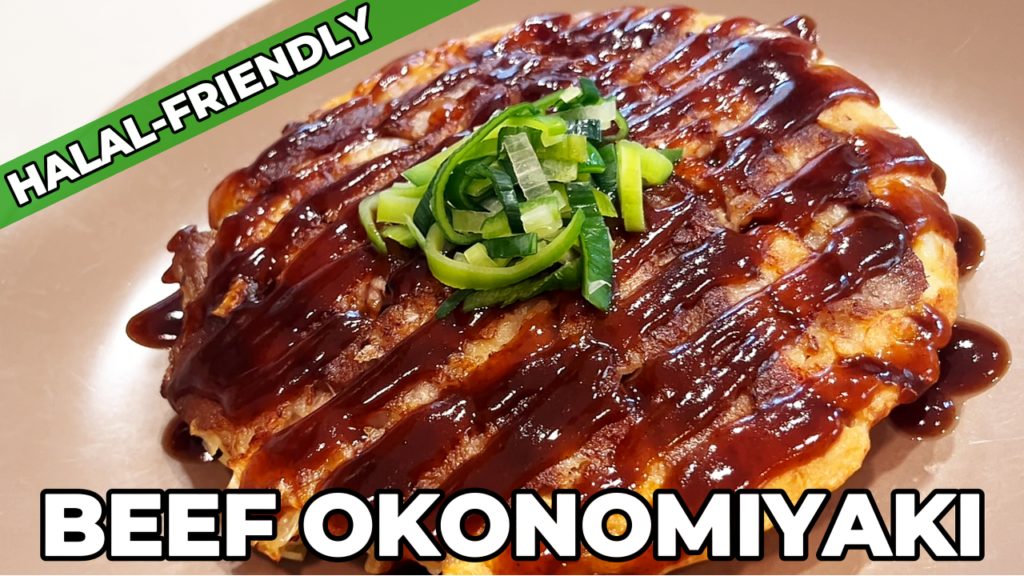
Today, we’re making halal-friendly Japanese okonomiyaki.
Okonomiyaki is a Japanese savory pancake typically made with cabbage, a batter, and often pork.
There are many different ways to make okonomiyaki, depending on the region and the household.
This version is a simple, basic okonomiyaki made with just a few ingredients, using beef instead of pork to keep it halal-friendly.
Let’s get started!
Halal-Friendly Notes
No Pork
Okonomiyaki is traditionally often made with pork in Japan.
This recipe uses thinly sliced halal beef instead to make a halal-friendly version.
Okonomiyaki Sauce
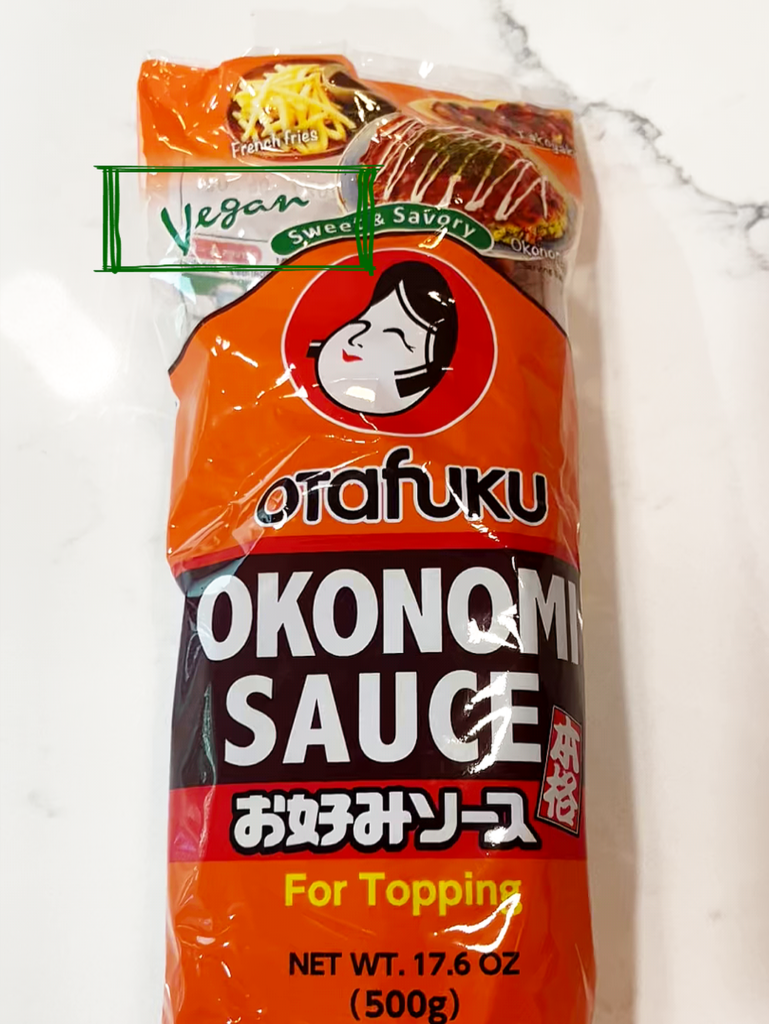
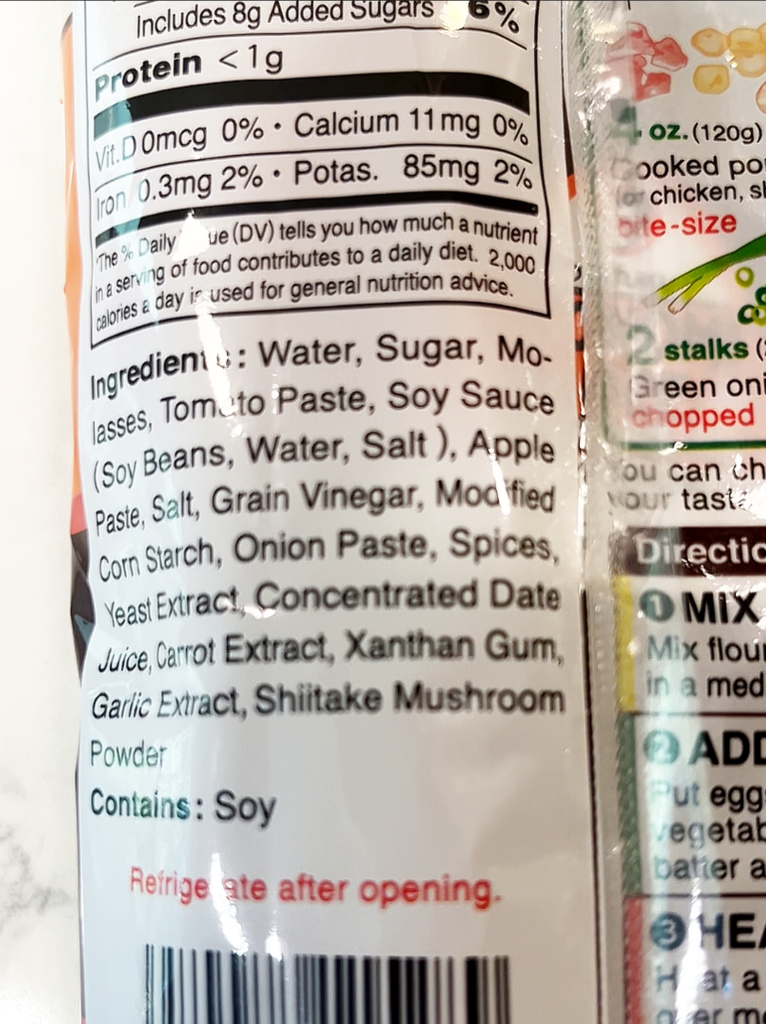
The okonomiyaki sauce used in this recipe is vegan. I checked the ingredients and chose it for this halal-friendly version, but it is not halal-certified.
Some okonomiyaki sauces may contain meat extracts, while halal-certified options are also available.
Please check the ingredients and choose the sauce that works for you.
Ingredients (Serves 1)
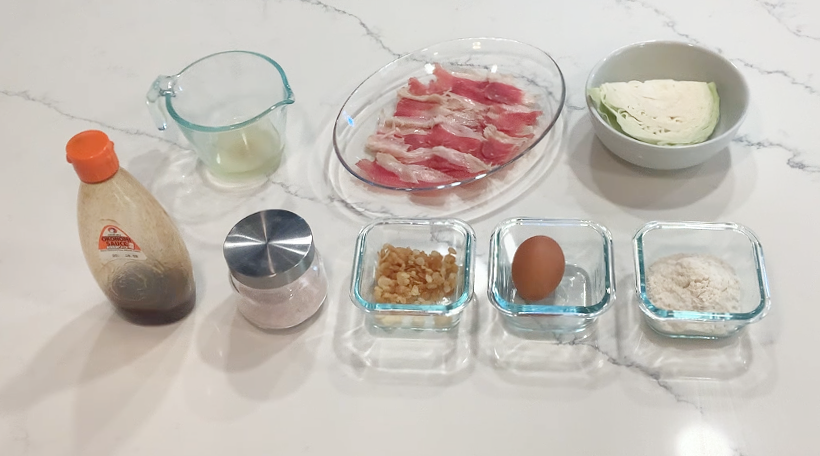
- Cabbage — 120 g (4 oz)
- Thinly sliced beef — 80 g (3 oz)
- Egg — 1
- All-purpose flour — 40 g (1.5 oz)
- Dashi — 50 mL (1.7 fl oz)
- Salt — a pinch
- Tenkasu, or tempura bits (Optional) — 2 tbsp
- Cooking oil — as needed
<toppings> – as needed
- Okonomiyaki sauce
- Fresh green onions
- Mayonnaise
- Aonori (dried seaweed)
- Bonito flakes
Prepare the Cabbage
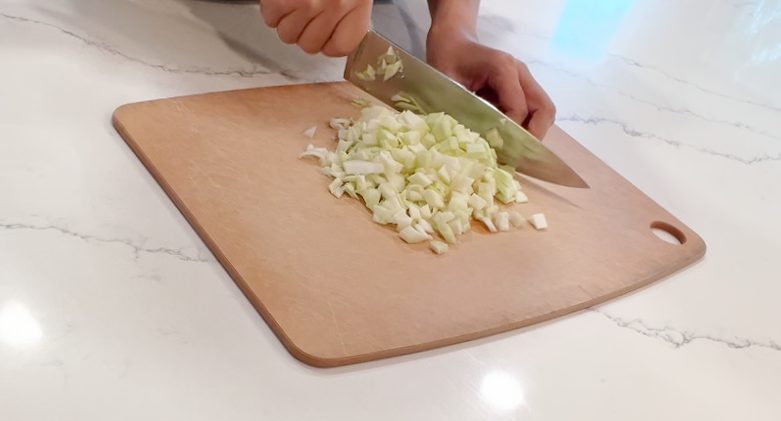
There are several ways to cut cabbage for okonomiyaki.
For this recipe, cut the cabbage into roughly 1-centimeter pieces. This allows you to really taste and feel the cabbage in every bite.
If there are any thick, tough parts of the core, slice them thinly.
Make the Batter
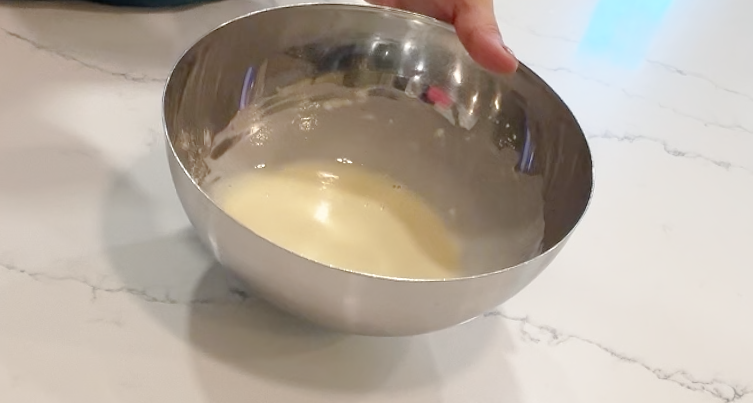
In a bowl, combine:
- 50 mL (1.7 fl oz) dashi
- 1 egg
- 40 g (1.4 oz) all-purpose flour
- A pinch of salt
Whisk everything together until there are no lumps.
Combine the Cabbage and Batter
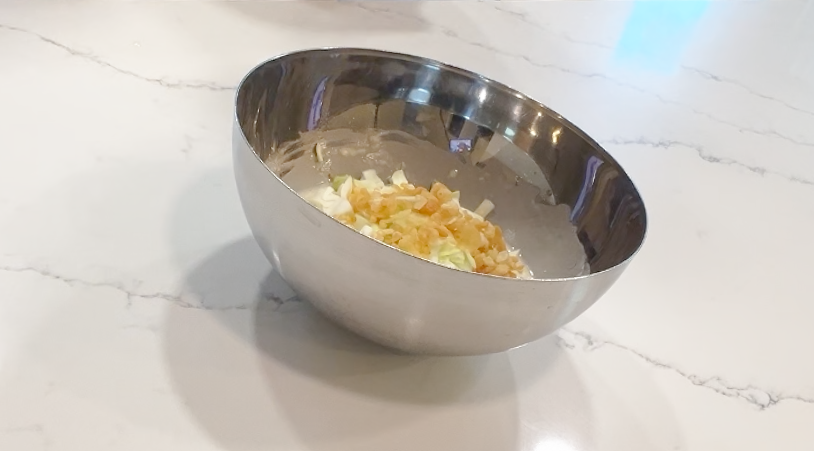
Add the chopped cabbage and 2 tablespoons of tenkasu, or tempura bits to the batter.
Tenkasu is optional, but it adds extra richness and makes the okonomiyaki even more delicious. If you can find it, I recommend giving it a try.
Gently fold everything together with a spoon.
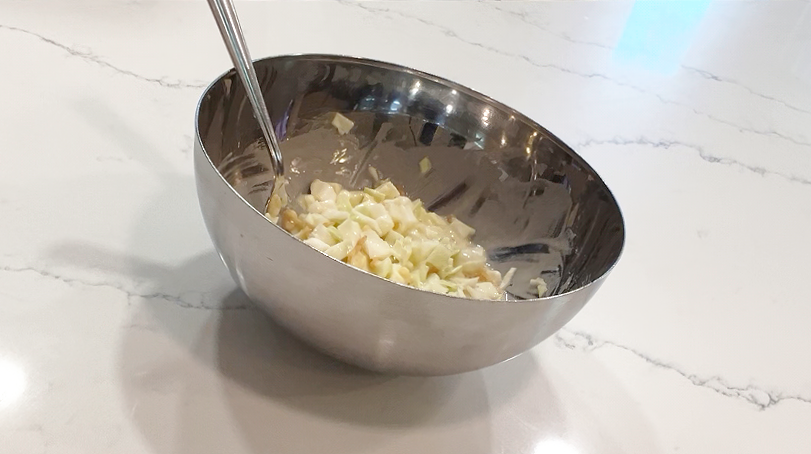
Be careful not to overmix. The cabbage can release too much moisture and make the batter watery.
Mix only until everything is evenly combined.
Cook the Okonomiyaki
Arrange the Beef in the Pan
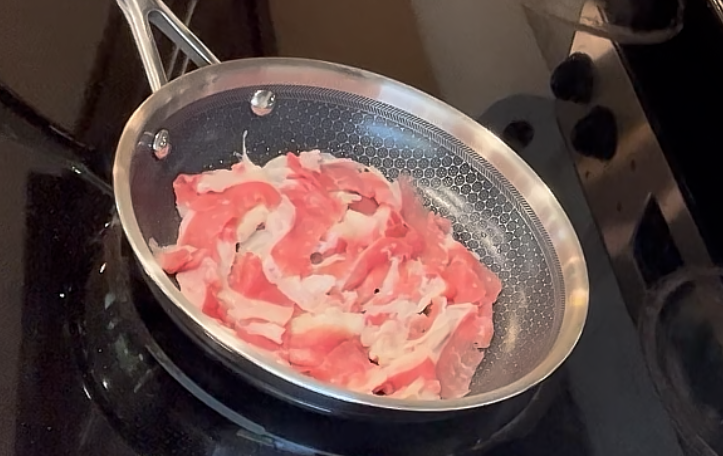
Lightly oil a frying pan.
Adjust the amount of oil depending on how fatty your beef is and how easily your pan tends to stick.
Keep the heat off while arranging the beef.
Place the thinly sliced beef in the cold pan.
Okonomiyaki is traditionally made with pork, but beef works very well in this halal-friendly version.
Choose beef with a good amount of fat. The fat adds flavor and helps keep the meat juicy and tender.
Add the Batter
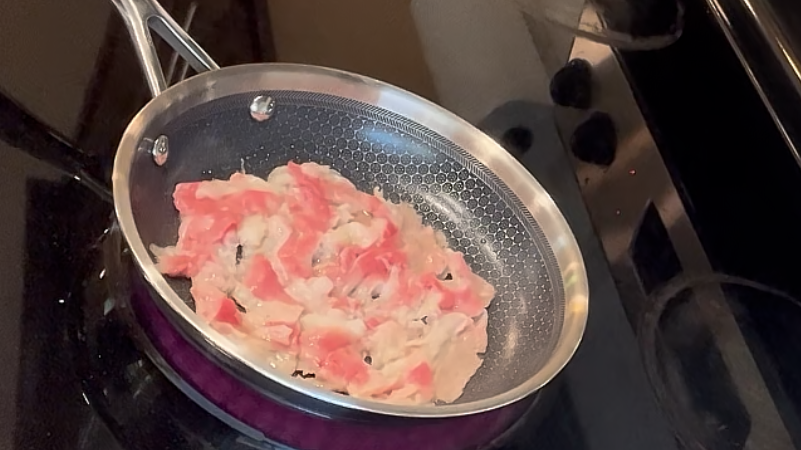
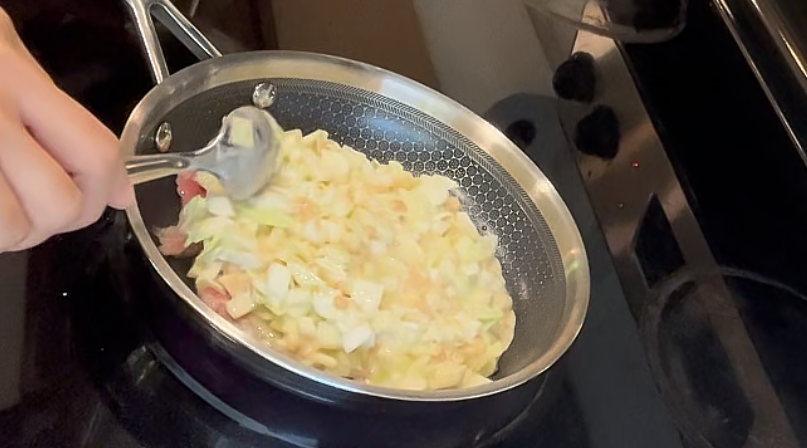
Once all the beef is arranged in the pan, turn the heat to medium.
When the beef starts releasing some fat and turns slightly pale, pour the batter over the beef.
Cook Until Fluffy
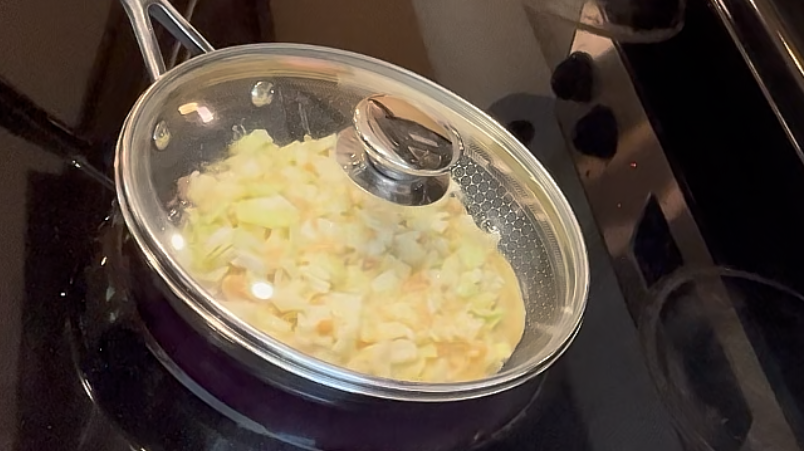
Cover the pan and reduce the heat to medium-low.
Cook the okonomiyaki for about 5 minutes, or until it becomes nice and fluffy.
Flip the Okonomiyaki

After about 5 minutes, check the okonomiyaki.
Once the edges of the batter look dry and the center feels firm when you slide a spatula underneath, it is time to flip.
Carefully flip the okonomiyaki.
Cook Uncovered
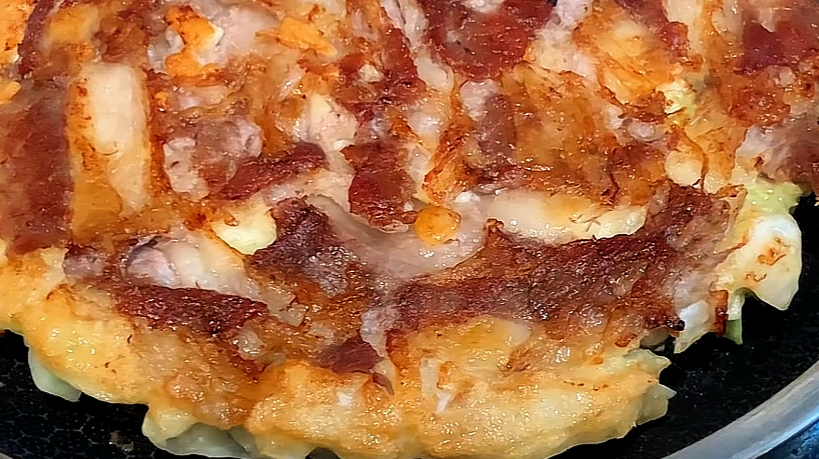
After flipping, cook the okonomiyaki uncovered.
This allows excess moisture to escape and helps give the okonomiyaki a nice, crispy finish.
Cook for about another 5 minutes.
Check the bottom for a nice golden-brown color.
Make sure the center is cooked through and there is no raw batter.
Once it looks good, the okonomiyaki is ready to serve.
Beef or Pork for Okonomiyaki?
Pork is more commonly used in Japan because it is affordable and works very well in okonomiyaki.
However, beef okonomiyaki can be just as delicious.
Choose a well-marbled cut, and the fat will help keep the meat juicy and tender, just like pork.
Beef has a slightly stronger flavor than pork, but with the savory sauce and mayonnaise on top, the difference is fairly subtle.
If you enjoy beef, give beef okonomiyaki a try!
Serve and Enjoy
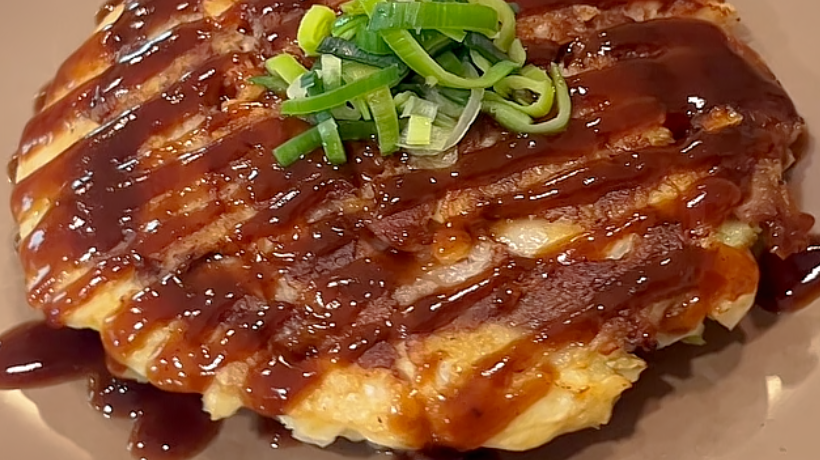
Transfer the okonomiyaki to a serving plate.
For this version, I’m keeping the toppings simple with okonomiyaki sauce and fresh green onions.
Some of the most popular toppings in Japan include:
- Okonomiyaki sauce
- Mayonnaise
- Aonori
- Bonito flakes
Feel free to add your favorite toppings.
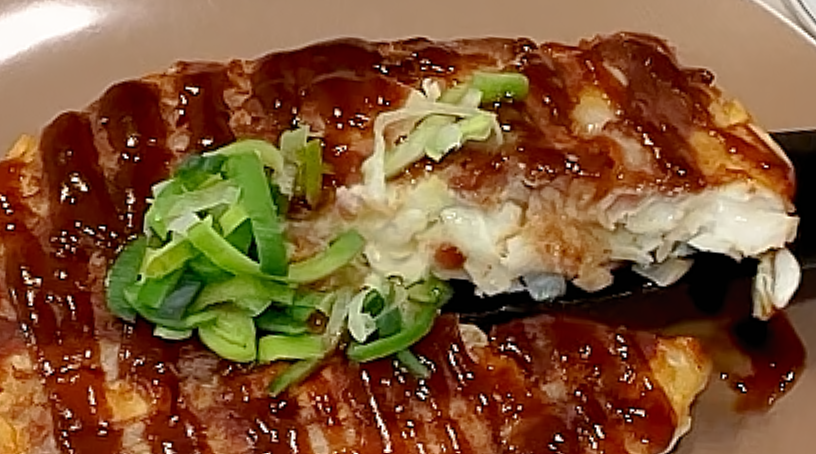
The savory beef, the texture of the cabbage, and the familiar flavor of okonomiyaki sauce come together in this simple, satisfying Japanese classic.
It’s simple, comforting, and delicious.
Enjoy!
Watch How to Make It
This video shows how to make halal-friendly Japanese okonomiyaki step by step.
A quick peek at today’s halal Japanese dish