Welcome to Nippon Spoon!
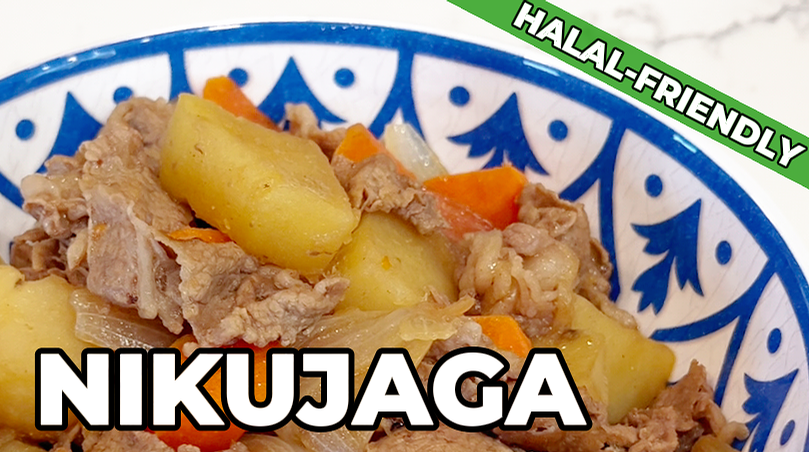
Today, we’re making nikujaga, a classic Japanese meat and potato stew.
Nikujaga is usually prepared with pork or beef, and many recipes use mirin and sake, which contain alcohol.
In this recipe, we skip alcohol entirely while keeping the traditional, comforting flavor—making it completely halal-friendly.
Let’s get started!
Halal-Friendly Notes
No Mirin, No Sake (Alcohol-Free)
This recipe does not use mirin or sake, which contain alcohol.
Instead, sugar is used to add sweetness.
The dish is still rich and satisfying without alcohol.
Soy Sauce Choice
Soy sauce without added alcohol is used in this recipe.
Halal-certified soy sauce is also a good option if available.
Added alcohol-free soy sauce I used is here.
Halal Beef
Halal-certified beef is used in this recipe.
Ingredients (Serves 3–4)
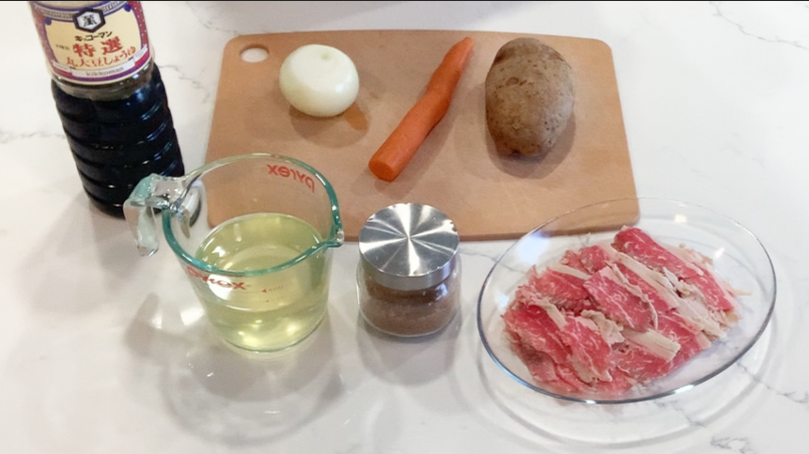
- Halal beef (thinly sliced) – 200 g (7 oz)
- Potato – 450 g (1 lb)
- Carrot – 90 g (3 oz)
- Onion – 150 g (5 oz)
- Dashi stock – 300 ml (1 1/4 cups)
- Soy sauce – 2 tbsp
- Sugar – 1 tbsp
- Salt – a pinch
- Cooking oil – as needed
Prepare the Ingredients
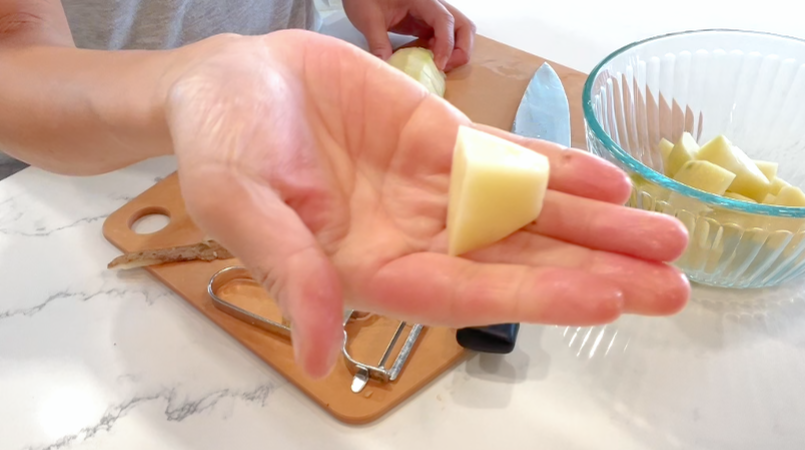
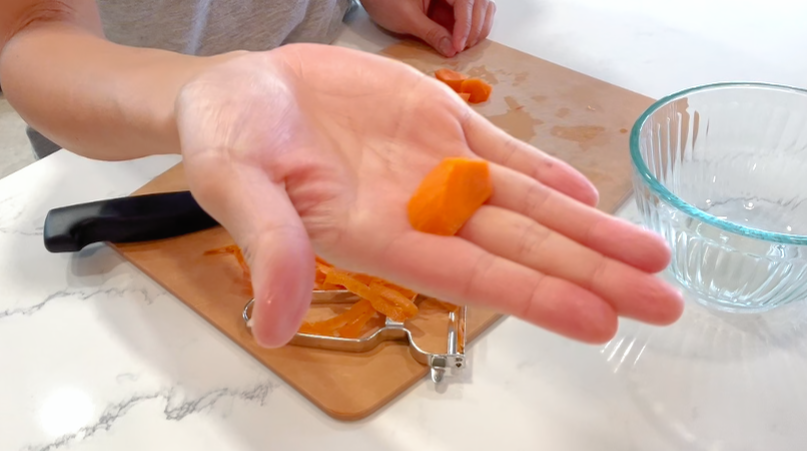
- Peel the potatoes and cut them into bite-sized pieces.
- Peel the carrot and cut it slightly smaller than the potatoes so it cooks evenly.
- Cut the onion into wedges.
- Thinly sliced fatty beef is ideal because it stays tender and adds flavor.
If the beef slices are large, cut them into easy-to-eat pieces.
If sliced beef is hard to find
・You can slice a block of beef yourself, or
・Use ground beef as an easy alternative. - Prepare dashi according to your preferred method.
The dashi packet I used is here.
Cooking
- Heat a pan over medium-high heat and add a small amount of oil.
- Add the beef, spread it out, and quickly sauté until the color changes.
Remove the beef from the pan and set aside.
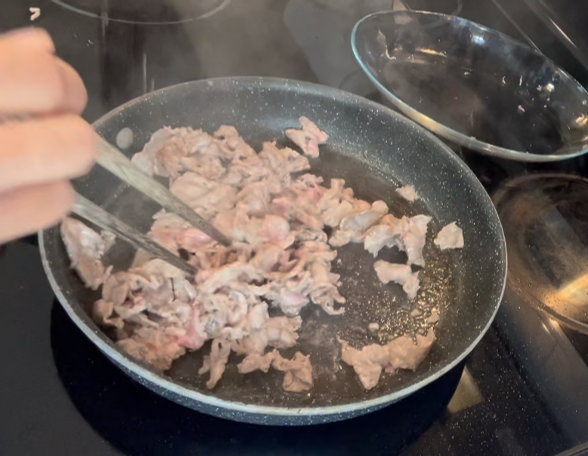
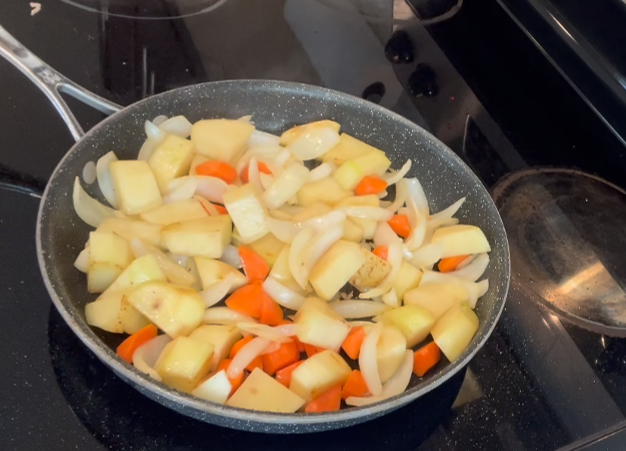
- If needed, add a little more oil to the pan.
- Add the onion, carrot, and potatoes.
- Sprinkle a small pinch of salt and sauté until lightly coated with oil and slightly browned.
- Return the beef to the pan.
- Add the dashi stock, sugar, and soy sauce.
Many recipes add sake here, but we skip it to keep this dish halal-friendly. It still tastes great.
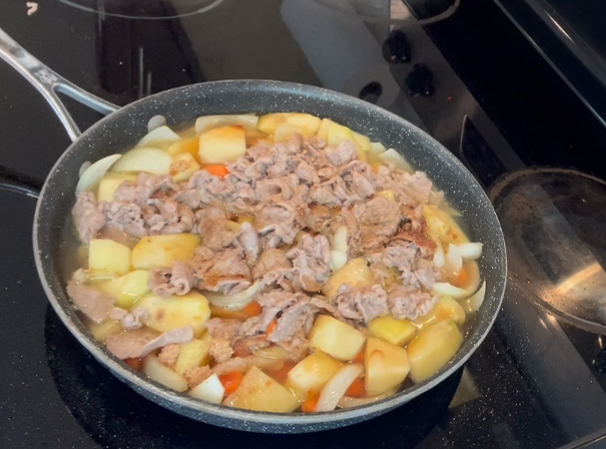
- Stir gently until the sugar dissolves and bring to a boil.
- Reduce the heat to medium-low, cover with a drop lid, and simmer for about 10 minutes, until the potatoes are tender.
- Halfway through cooking, gently turn the ingredients so everything cooks evenly.
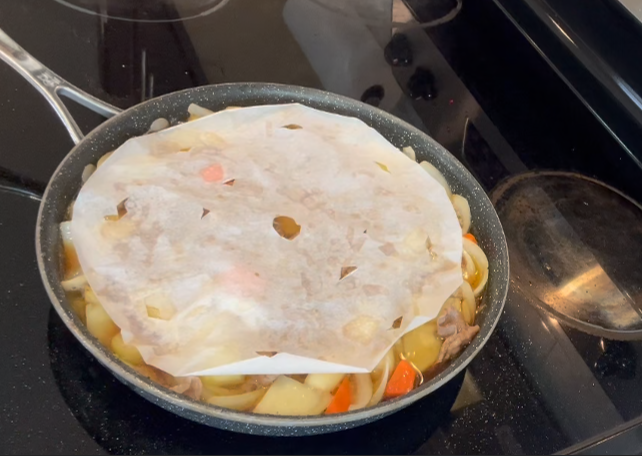
- Remove the drop lid, increase the heat slightly, and simmer for a few more minutes to reduce the liquid.
- Taste and adjust with a little more soy sauce or sugar if needed.
- Turn off the heat.
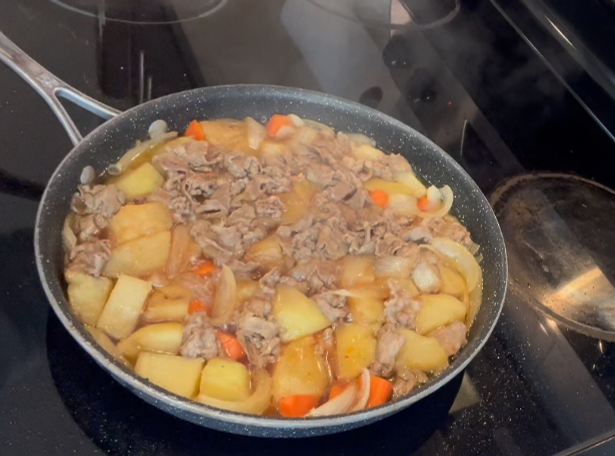
Serving Tips
Nikujaga is delicious right away, but if you have time, let it cool once before serving.
As it rests, the flavors soak in even more.
In Japan, nikujaga with well-absorbed flavors is often preferred.
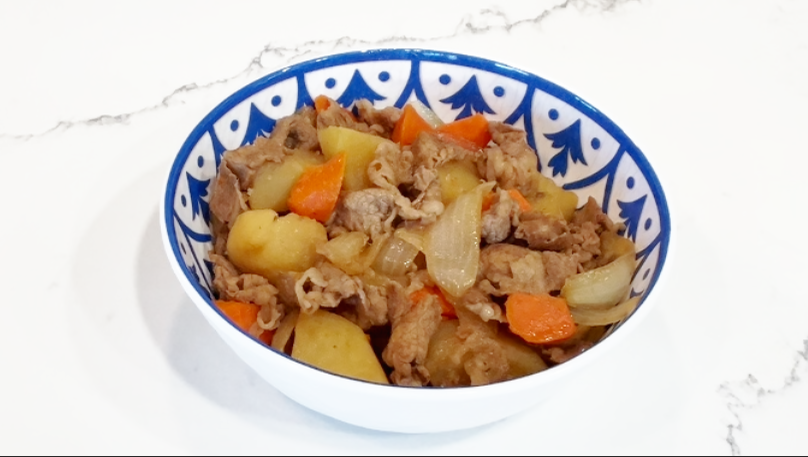
Enjoy this gently sweet and savory Japanese comfort dish.
Watch How to Make It
This video shows how to make halal-friendly nikujaga step by step.